

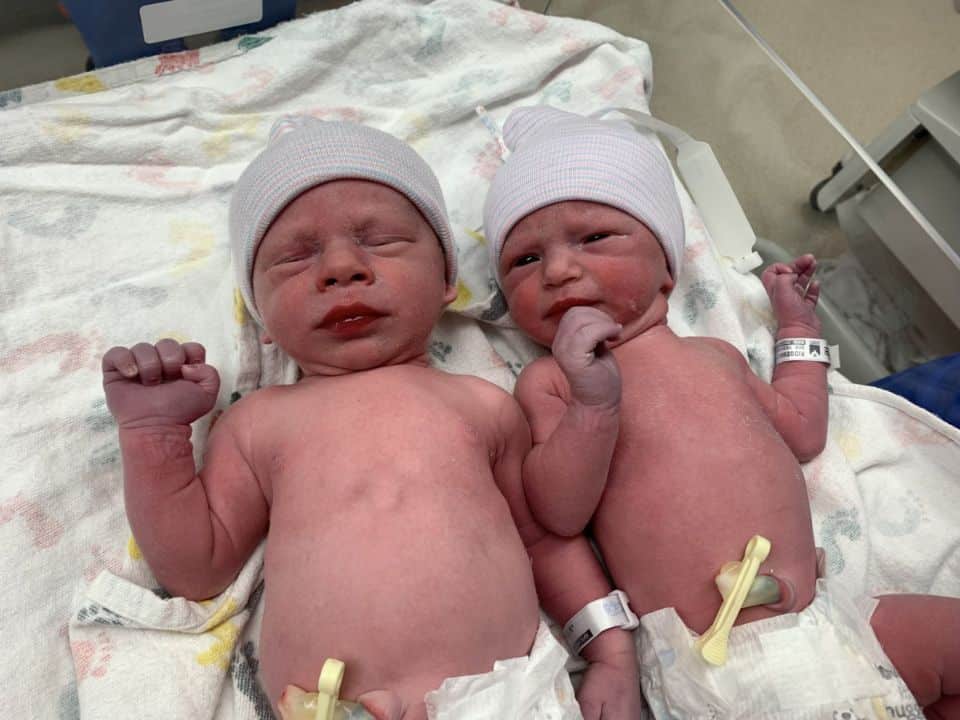
In Oregon, United States, Philip and Rachel Ridgeway have just welcomed their twins conceived more than thirty years ago, thanks to embryos frozen in 1992 and donated by the National Embryo Donation Center in Knoxville, Tennessee.

What is cryopreservation and how does it protect embryos?
Cryopreservation involves freezing embryos at –196 °C (liquid nitrogen) to keep them viable until transfer, usually at the blastocyst stage (day 5–6 after fertilization). The process begins like IVF: ovarian stimulation, egg retrieval, fertilization, and then ultra-rapid freezing at –320 °F.

How were twins born from embryos frozen for 30 years?
Dr. Karla Yasmín Santiago, a Reproductive Biology specialist, notes that early cryopreservation techniques were less precise, making this case extraordinary. Today, 80 % of embryos survive thawing, but without rigorous lab monitoring pregnancy rates rarely exceed 50 %.
“This result is impressive: early methods lacked today’s precision. Even now, only about 80 % of embryos survive thawing and fewer than 50 % achieve pregnancy without strict control and good maternal health.”
Dr. Santiago

The Spanish Fertility Society (SEF) reports that 80 % of blastocysts survive thawing and pregnancy rates range from 20 % to 50 %. MedlinePlus reports similar figures.
How has cryopreservation improved today?
With vitrification and advanced protocols, survival exceeds 90 % and pregnancy rates increase. Modern incubators precisely control gases (O₂, CO₂) and temperature. Genetic testing (PGT-A) helps select embryos with the highest chance of a healthy baby.
“Today you can freeze your embryos for as long as you need, whether for medical or personal reasons. However, personalized diagnostics are key to success.”
Dr. Santiago
How to preserve my fertility with cryopreservation?
If you’re considering fertility preservation, learn about our preservation services and start with a comprehensive reproductive health assessment. At Ingenes we guide you on freezing eggs or embryos.
Schedule your appointment to design a personalized plan and increase your chances of pregnancy. Don’t self-medicate: always consult a Reproductive Medicine specialist.
Frequently Asked Questions
1. How Long Can Frozen Embryos Remain Viable?
Properly vitrified embryos can remain viable indefinitely. There are successful births after more than 25 years of storage. Key factors are ultra-rapid cooling rates and stable storage at –196 °C, with constant monitoring to prevent crystal formation.
Since the 1990s, protocols have improved post-thaw survival to over 90 %, though initial embryo quality and lab expertise remain critical.
2. What Factors Influence Survival After Thawing?
Survival depends on embryo quality, vitrification solution composition, cooling and warming rates, and storage stability. Blastocysts (day 5–6) generally withstand thawing better.
Lab conditions such as low O₂ levels (5 %), stable temperature, and high-purity nitrogen reduce oxidative stress. The embryologist’s skill is essential for precise thawing.
3. Are There Risks in Transferring Frozen Embryos?
Risks are similar to traditional IVF: multiple gestations, ovarian hyperstimulation syndrome (in fresh cycles), and ectopic pregnancy (<2 %). Frozen embryo cycles usually have lower OHSS risk.
Long-term studies show no increased congenital anomalies compared to fresh IVF. Proper uterine preparation and medical follow-up minimize complications.
4. Can Women with Low Ovarian Reserve Benefit from Embryo Freezing?
Yes. With low reserve, embryos can be vitrified from retrieved eggs. Even a small egg cohort can yield viable embryos.
Hormonal analysis (AMH, FSH) and antral follicle count help design appropriate protocols, maximizing egg yield without compromising ovarian health.
Sources
- Practice Committee of the American Society for Reproductive Medicine. (2013). Cryopreservation of mature oocytes: a guideline. Fertility and Sterility, 99(1), 37–43. https://doi.org/10.1016/j.fertnstert.2012.09.016
- MedlinePlus. (2022). Oocyte cryopreservation. U.S. National Library of Medicine. https://medlineplus.gov/cryopreservation.html
- Spanish Fertility Society (SEF). (2021). Registro de Técnicas de Reproducción Asistida en España. https://www.sef.es/
- Scott, L., & Smith, G. D. (2015). Embryo storage: safety and ethics. Human Reproduction Update, 21(2), 225–236. https://doi.org/10.1093/humupd/dmv051
If you’re on this journey, remember every case is unique. Don’t hesitate to seek support from a fertilization specialist; they will provide the guidance and plan needed to turn your dream of parenthood into reality.